有關協助精神病人復元的概念敘述,下列何者錯誤?
詳細解析
本題觀念:
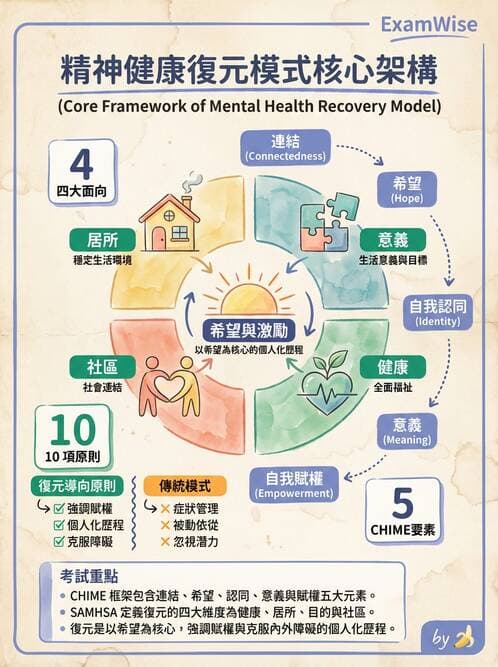
精神健康復元模式(Recovery Model)強調「復元不是治癒」,而是一個個人化、以希望(hope)為核心,並透過自我導向(self-direction)、賦權(empowerment)、尋找意義(meaning/purpose)及社會支持(social support)等多元途徑,讓精神病人克服內外挑戰並重建生活品質的過程(psychiatryonline.org)。
選項分析
-
選項A 找到自信並保持希望
復元模式將希望(hope)視為基礎,並認為自信(self-confidence)與勇氣是引發改變的催化劑。內在條件(Internal conditions)首要即為 hope,並包含自我效能與責任感等元素(psychiatryonline.org)。 -
選項B 建立保持正向自我感
身份(Identity)的重建是復元要素之一,透過發掘優勢與個人價值,增強自尊與歸屬感,協助個體超越「病人」標籤,恢復全面自我(centersforopportunity.org)。 -
選項C 建立生病的意識,找出生活的意義
Hope 的態度構成不可或缺的第一步即是「recognizing and accepting that there is a problem」,並進而在 Purpose(意義)層面,透過工作、志工、興趣等活動,找到生活重心與意義(psychiatryonline.org)。 -
選項D 理解精神疾病的不可控制及無法處理與克服的障礙
復元模式明確反對此觀點。SAMHSA 指出 recovery emerges from hope 並強調「可以且會克服內外挑戰與障礙」(overcome the internal and external challenges, barriers, and obstacles)(samhsa.gov)。此選項與復元核心精神相違背,故為錯誤選項。
答案解析
復元模式認為精神病人能透過 hope、自我導向與賦權過程,管理或克服疾病帶來的內外障礙,重建健康、穩定居所(Home)、日常意義(Purpose)與社會連結(Community),進而提升生活品質。選項D 認為「精神疾病不可控制且無法處理與克服」,與 recovery model 中「barriers can be overcome」的核心理念相反,故為唯一錯誤答案。
核心知識點
- SAMHSA 10大復元原則:Emerges from hope; Is person-driven; Occurs via many pathways; Is holistic; Is supported by peers and allies; Is supported through relationships and social networks; Is culturally based and influenced; Is supported by addressing trauma; Involves individual, family, and community strengths and responsibility; Is based on respect(verywellmind.com)
- 內在條件(Internal conditions):Hope, Healing, Empowerment, Connection(psychiatryonline.org)
- 四大面向(4 Dimensions):Health, Home, Purpose, Community(samhsa.gov)
- Insight(認知到自身問題)為啟動復元的起點;Meaning/Purpose(生活意義)為持續前進的動力
臨床重要性
實踐復元導向服務能提升病人自我效能與社會參與,同時降低再住院率,對精神醫療與社區復健具有深遠影響。