
108年:專師通論(1)
下列何者不是GRADE (Grading of Recommendation Assessment Development and Evaluation)評核系統進行證據品質分級時需考量的降級因素?
A間接性(indirectness)
B存在劑量-效應關係(dose-response gradient)
C不一致性(indirectness)
D偏差風險(risk of bias)
詳細解析
本題觀念
GRADE 系統在評估證據品質(quality of evidence)時,決定「降級」(downgrading) 與「升級」(upgrading) 的判準。
核心概念
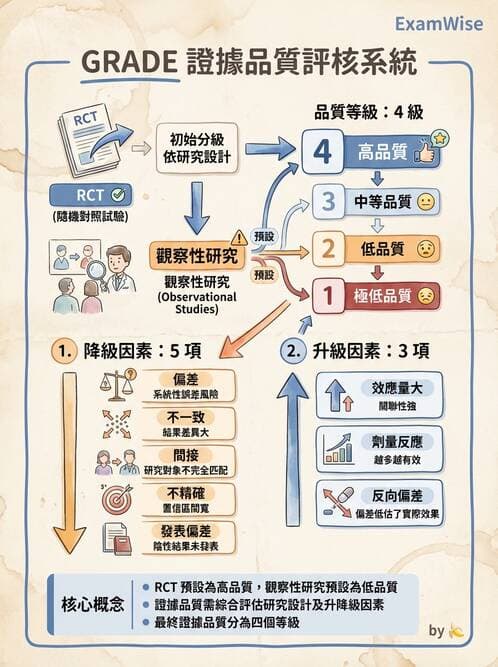
GRADE 將證據品質分為高、中、低、極低四級。RCT 先天屬高品質、觀察性研究先天屬低品質;之後依「五項降級因素」及「三項升級因素」調整。
五項降級因素
(1) 風險偏差 (risk of bias)、(2) 不一致性 (inconsistency)、(3) 間接性 (indirectness)、(4) 不精確性 (imprecision)、(5) 發表偏差 (publication bias)。
三項升級因素
(1) 大效果 (large effect);(2) 明顯劑量-反應梯度 (dose-response gradient);(3) 所有偏差皆低估效果。
各選項解析
A. 間接性 (indirectness)
研究族群、介入、比較或結果與臨床問題不完全吻合時,需對證據降級。屬於五大降級因素之一 → 非本題答案。
B. 存在劑量-效應關係 (dose-response gradient)
劑量愈高、效果愈強,反映關係真實且一致,屬 GRADE 的「升級
...(解析預覽)...
升級 VIP 解鎖圖文解析