
104年:專師通論
在GRADE (Grading of Recommendations, Assessment, Development and Evaluation)證據評析 系統中,以下何者為觀察性研究(Observational studies)的升級因素?
A偏差風險(risk of bias)
B預估效果量的不精確性(imprecision of the estimated effect)
C明顯的估計效果量(magnitude of the estimated effect)
D證據間接性(indirectness of evidence)
詳細解析
本題觀念
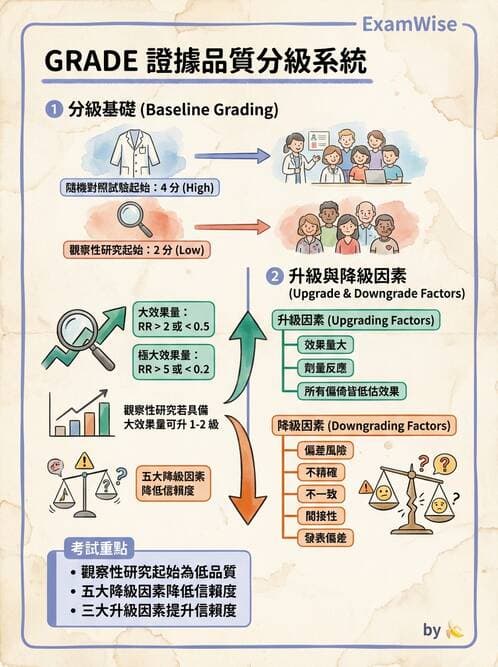
GRADE 系統中「觀察性研究證據品質調整」的升級與降級因素
-
核心概念
- GRADE 用於評估研究證據品質。觀察性研究起始為「低品質」,但若具備特定「升級因素」可提高等級;相反若存在「降級因素」則降低。
- 典型升級因素:
- 大且一致的效果(large magnitude of effect)
- 明顯的劑量反應關係(dose-response gradient)
- 所有合理偏差皆低估效果(confounding would reduce effect)
- 典型降級因素:偏差風險、結果不一致性、不精確、間接性、發表偏差。
-
選項解析 A. 偏差風險 (risk of bias)
- 屬於「降級因素」。若研究方法學品質差,證據等級向下調整,並非升級 → 錯。
B. 預估效果量的不精確性 (imprecision)
- 信賴區間過寬或樣本數不足時同樣屬「降級因素」,不會提高證據品質 → 錯。
C. 明顯的估計效果量 (magnitude of the estimated effect)
- 當觀察性研究顯示效果量極大且一致,依 GRADE 可升級 1–2 級,甚至由低升至高。這正是升級因素 → 正確。
D
...(解析預覽)...
升級 VIP 解鎖圖文解析